Line Draw CAD Lab
Practice notes
The integration of CAD and audio-visual design, part two
Whether CAD is necessary for audio-visual system design, what it saves an integrator, and why the smallest firms carry the greatest risk without it.
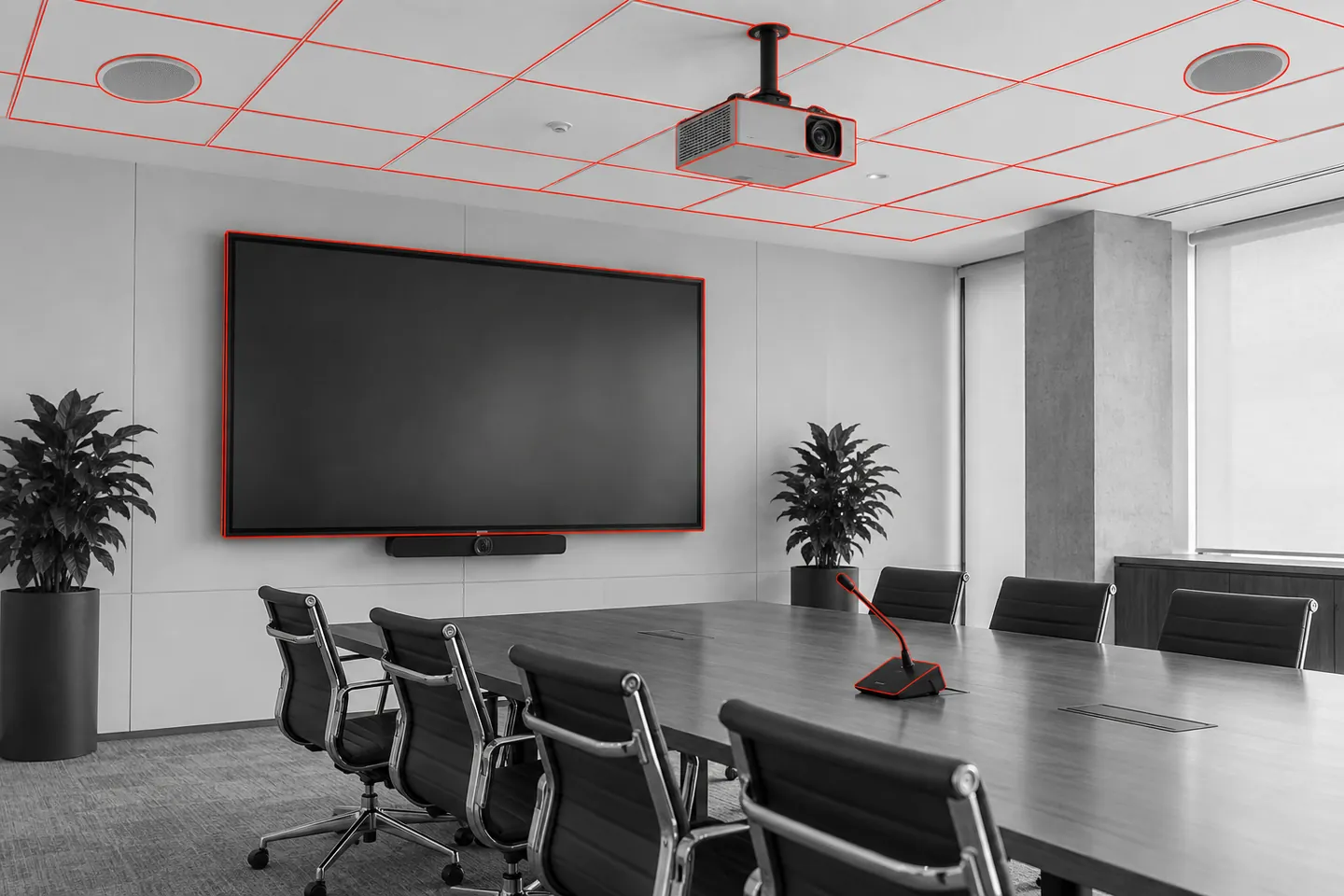
In the first part we set out the primary link between CAD and audio-visual system design, and argued that the two are interdependent. CAD does not play a supporting role in the process. It is a necessity in the project pipeline. That article closed with three questions, and we take them one at a time.
Is CAD necessary for audio-visual system design and integration?
It is. Architectural plans, elevations and sectional details are required before a building or a commercial fit-out is constructed, and nobody argues the point. The same should be self-evident for audio-visual system design.
It is a strange thing, then, that the idea is often met with scepticism when the architectural equivalent is taken as a given, even by people outside the field. We would not raise it had we not met those objections in meetings with integrators and proprietors, on several occasions.
CAD is integral as far as audio-visual system design is concerned. The next question is why.
What does CAD bring to audio-visual design?
The fundamental benefit is the reduction of design error, particularly during pre-construction planning and development. Mapping equipment locations and cable pathways on floor plans, preparing wiring diagrams that show how each device in the chain connects, and drawing rack elevations that fix rack-unit heights and the position of processing and switching gear: all of this makes for a smoother delivery on site during installation and commissioning.
Several further benefits follow. A complete set of drawings on file is a useful reference when a client later decides to upgrade the system. Supplying technical diagrams and visuals also reflects a level of professionalism that raises a firm’s standing with its clients.
The economics of a mistake
Running an audio-visual business is neither easy nor cheap, and integrators charge accordingly, with good reason. The integrator carries a considerable amount upfront on any project. Alongside staff and general operating costs, there is the equipment itself and everything that goes with it: cable drums, connectors, custom hardware, mounting brackets. Billing recovers those costs in the end, with a margin. Integrators have told us their margins are often slim, enough to keep the company running steadily.
Now imagine a serious mistake on such a project. Specifying and ordering equipment models without the inputs and outputs needed to integrate with the main system. Underestimating the quantity of cable, and running short mid-installation. Fabricating a custom hardware item without verifying the dimensions. It is not hard to see how a slim margin turns into a loss, because putting those errors right is expensive. All of it traceable to time not spent in the design phase and not tested against drawings.
Who this is really for
Practitioners who happen across this article may well say that the point is obvious. They are right, and that is the argument: the integration of CAD and audio-visual design should be a given. Large audio-visual companies already work this way, with a dedicated in-house CAD team preparing their drawings and technical documentation.
This article is not aimed at them. It is meant for the small independent audio-visual firms, the ones most likely to suffer the financial consequences of a design error because they have the least room to absorb it. They cannot afford the mistakes their larger counterparts can. It is that group we would encourage to invest more time and diligence in CAD, and to make it an integral part of the design and project process.
That leaves the last question: which types of CAD documentation are most valuable in a typical audio-visual design workflow? There is enough ground there for an article of its own, and we will address it separately.
Thank you for reading.