Line Draw CAD Lab
Practice notes
The integration of CAD and audio-visual design, part one
The audio-visual industry has grown into an engineering discipline of its own. Where CAD sits in that work, and why adoption across the region is uneven.
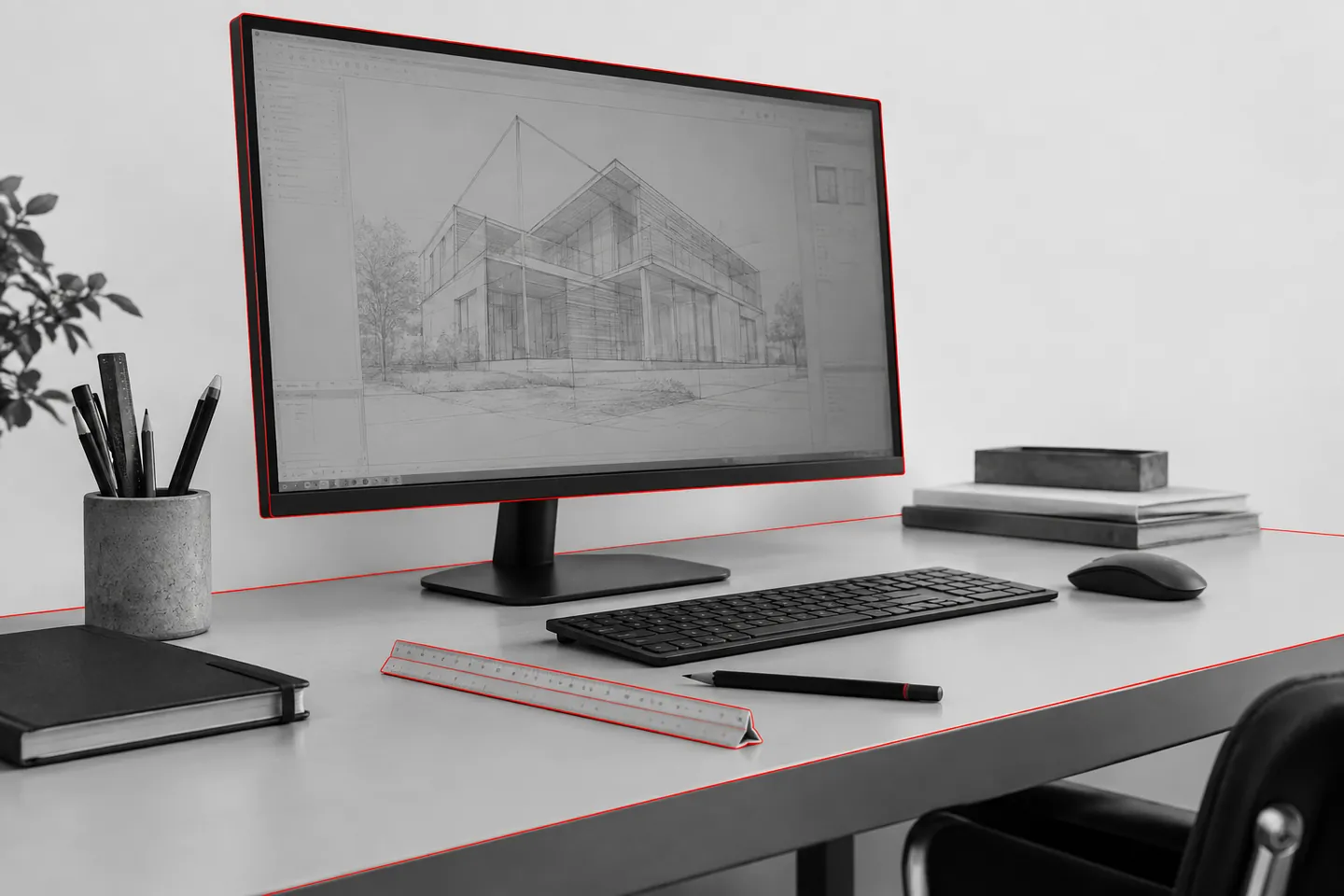
The professional audio-visual industry is one of the most prominent and fastest-changing sectors within engineering. It is a multibillion-dollar industry with a complex chain of participants: manufacturers, dealers, systems integrators, design consultants, engineers, programmers, sales consultants, presentation professionals and a range of specialist suppliers.
From modest beginnings, the industry is now the primary provider of technological solutions for sound, lighting, video, digital display and projection, control and automation, and network-based interfacing. Audio-visual systems were once treated as a luxury, taken seriously only by those who saw their potential. Their relevance today is not in question.
Audio-visual systems are central to the daily operation of most social, government and educational institutions. They are found in collaborative conferencing and presentation rooms, auditoriums, university lecture halls, command and control centres, corporate boardrooms, digital signage, correctional facilities, hospitals and healthcare buildings and training centres, and the list continues. They have become part of how organisations communicate.
The question is a standard, not a side
The point is not to divide the industry into adopters and rejectors of CAD for audio-visual integration. It is about cultivating a standard across the industry, and that matters particularly in Asia.
In Malaysia, where we operate, the integration of CAD and audio-visual design is still in its early stages compared with practice in the West. Over the past year it appears that only a small number of local audio-visual companies treat CAD as an integral part of their design workflow. Those that do tend to be the larger players, tied to multi-engineering groups or corporations, with both the resources and the pressing need, given the scale and complexity of their projects, to keep a full in-house CAD team.
Smaller companies are a mixed picture
Small and mid-sized companies vary a great deal, and in our experience they fall into three groups.
The first takes a purist approach, usually the older veterans in the field, and finds CAD unnecessary or even a hindrance. This group prefers an intuitive approach to system design and configuration, worked out as the project goes.
The second sees the value of CAD and how it could be useful, but treats the shift to a CAD-based process as too expensive, an added luxury, or not worth the trouble to explore, and stays with what is familiar. In our view that judgement is mistaken.
The third group is the one we feel for most. They recognise what CAD would bring to their processes and efficiency, but genuinely cannot afford it, in-house or outsourced, because their budgets cover core business costs and little else. They are usually start-ups, or businesses still in the early stages of growth.
Three questions to sit with
That leaves three questions worth reflecting on:
- Is CAD necessary for audio-visual system design and integration?
- If so, what are the benefits of integrating CAD into audio-visual design?
- Which types of CAD documentation are most valuable in a typical audio-visual design workflow?
We take these up in the second part.